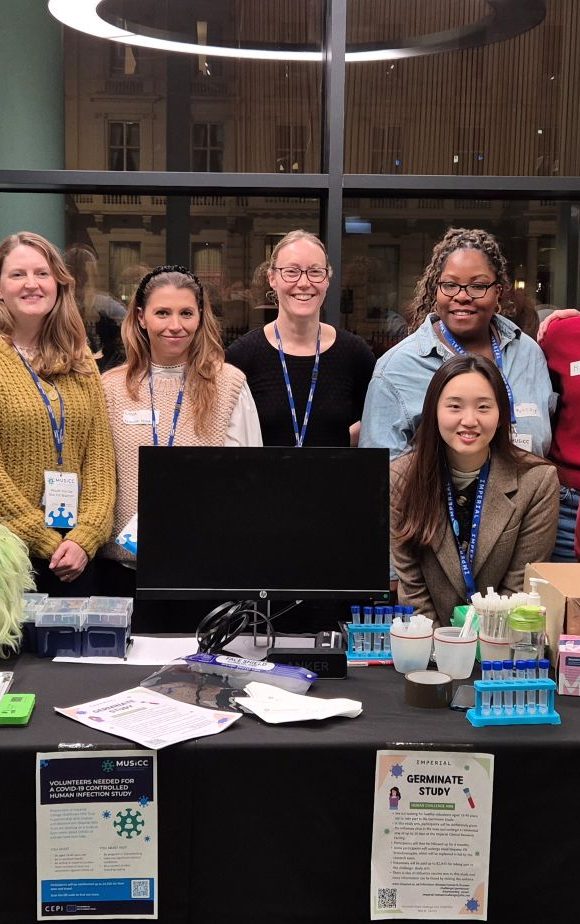
On the 29th January MUSICC unveiled a refreshed version of the ‘Would You Get Sick for Science?’ public engagement stand, this time as part of Imperial Lates: Happiness & Health.
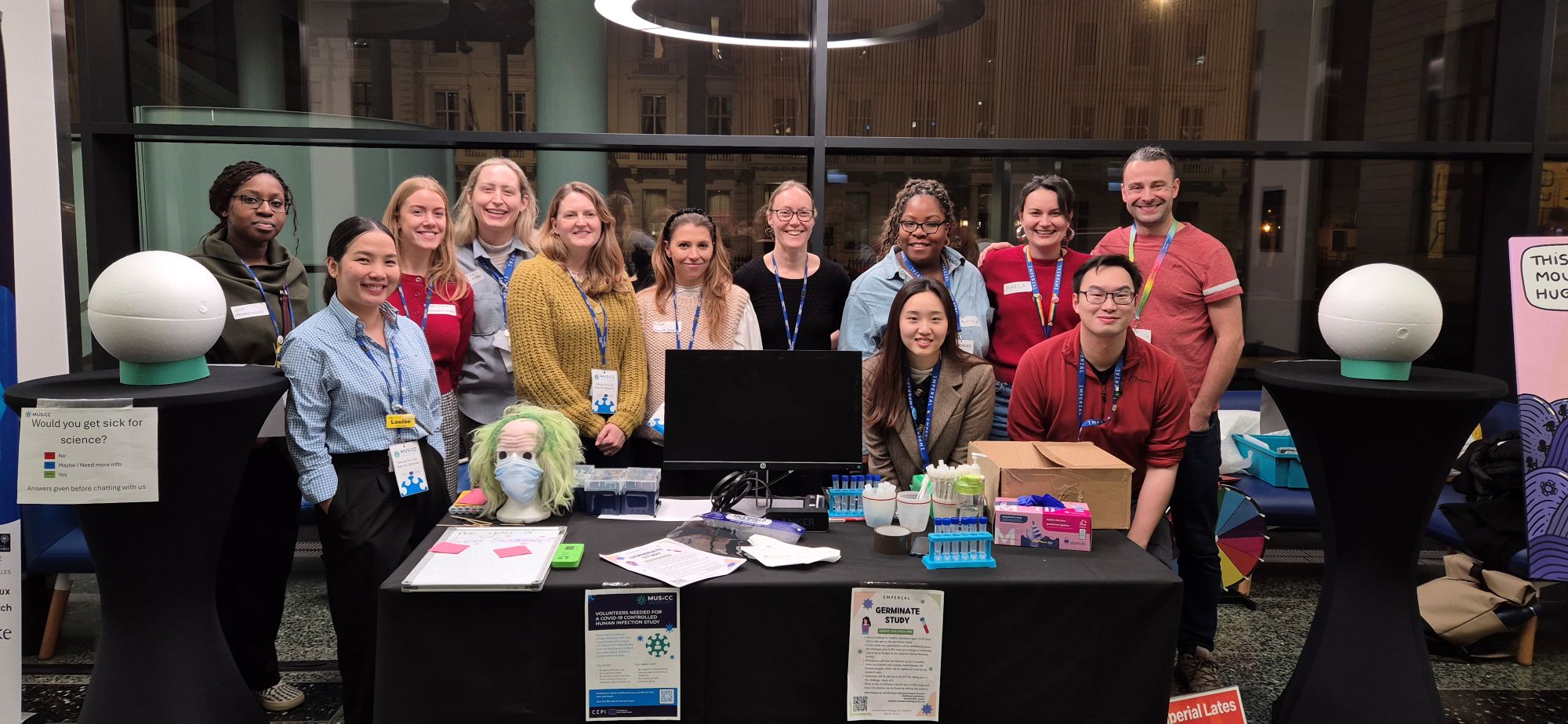
The MUSICC team ready for the night ahead! Credit: Brendan Foster / Imperial College London
Imperial Lates is Imperial College’s free after-hours event series, where adults from across London explore the latest scientific ideas through hands-on activities, dynamic workshops and engaging talks.
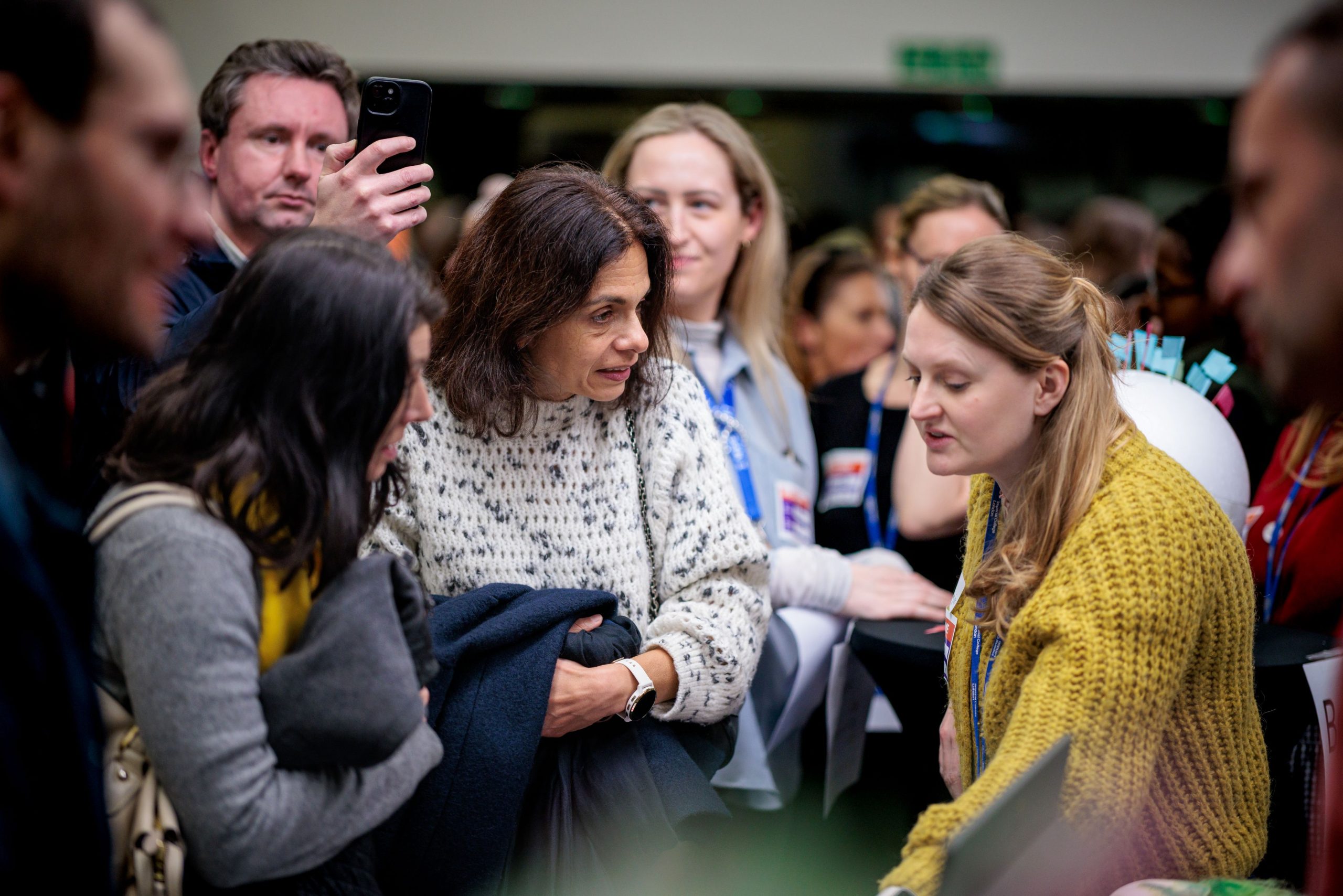
The stand gathered a lot of interest. Credit: Brendan Foster / Imperial College London
For this edition, the stand combined popular previous activities with new additions to spark discussions about human challenge studies and MUSICC’s broader aims. Participants tested their swabbing skills in the ‘Super Swabber’ activity, and discovered how easily we can shed viruses into our environment with the help of UV light and how MUSICC is working to better understand this shedding process. MUSICC’s vibrant vignette was also on display, alongside the ever-popular virus models, used to gather public opinions on taking part in human challenge studies.
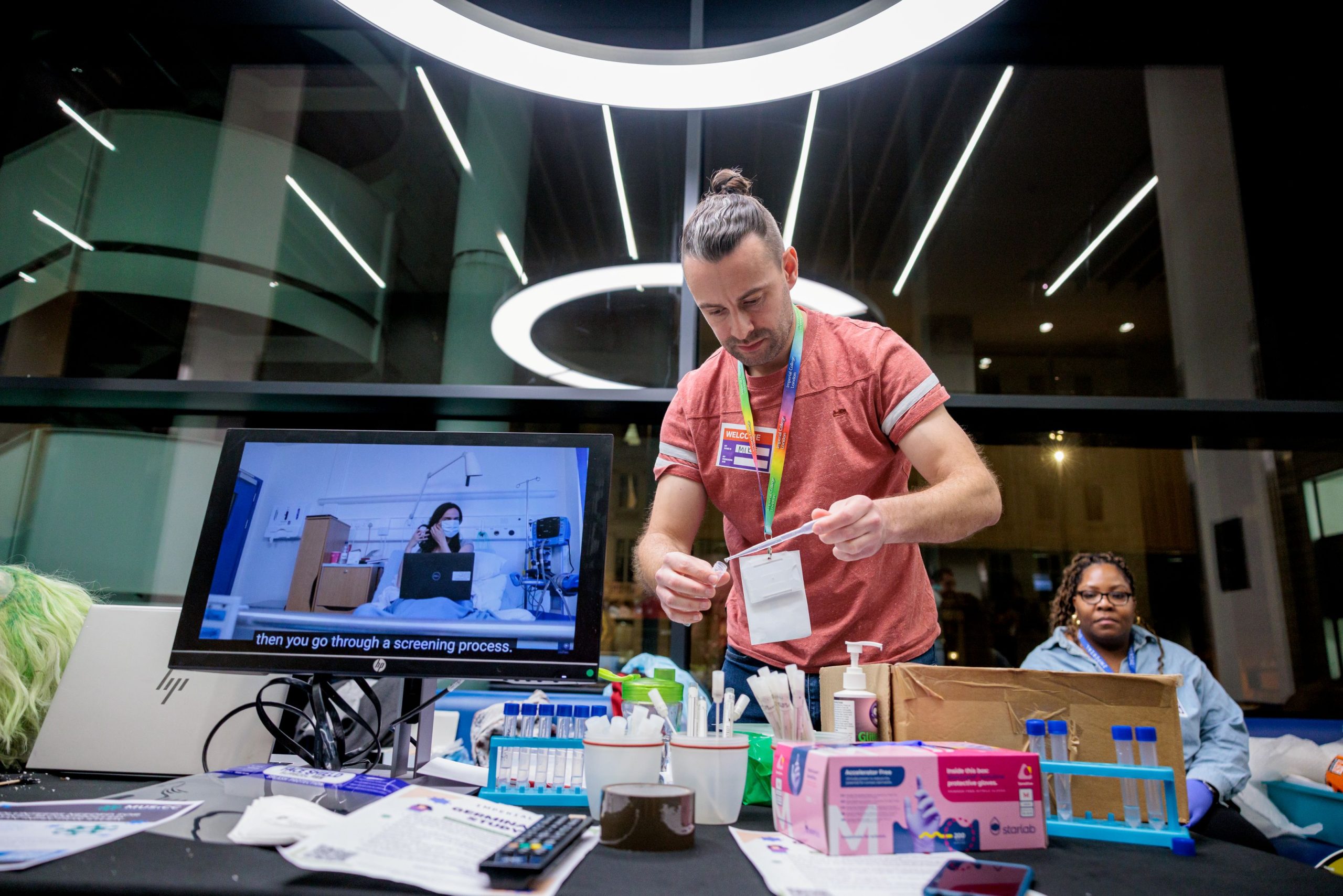
Setting up to demonstrate some viral shedding. Credit: Brendan Foster / Imperial College London
The stand was run in collaboration with colleagues from Imperial’s Department of Infectious Disease, including members of the Clinical Research Nurse team. This team work directly on MUSICC’s human challenge studies based at Imperial, and they were able to offer visitors an authentic glimpse into what volunteering in a study actually involves.
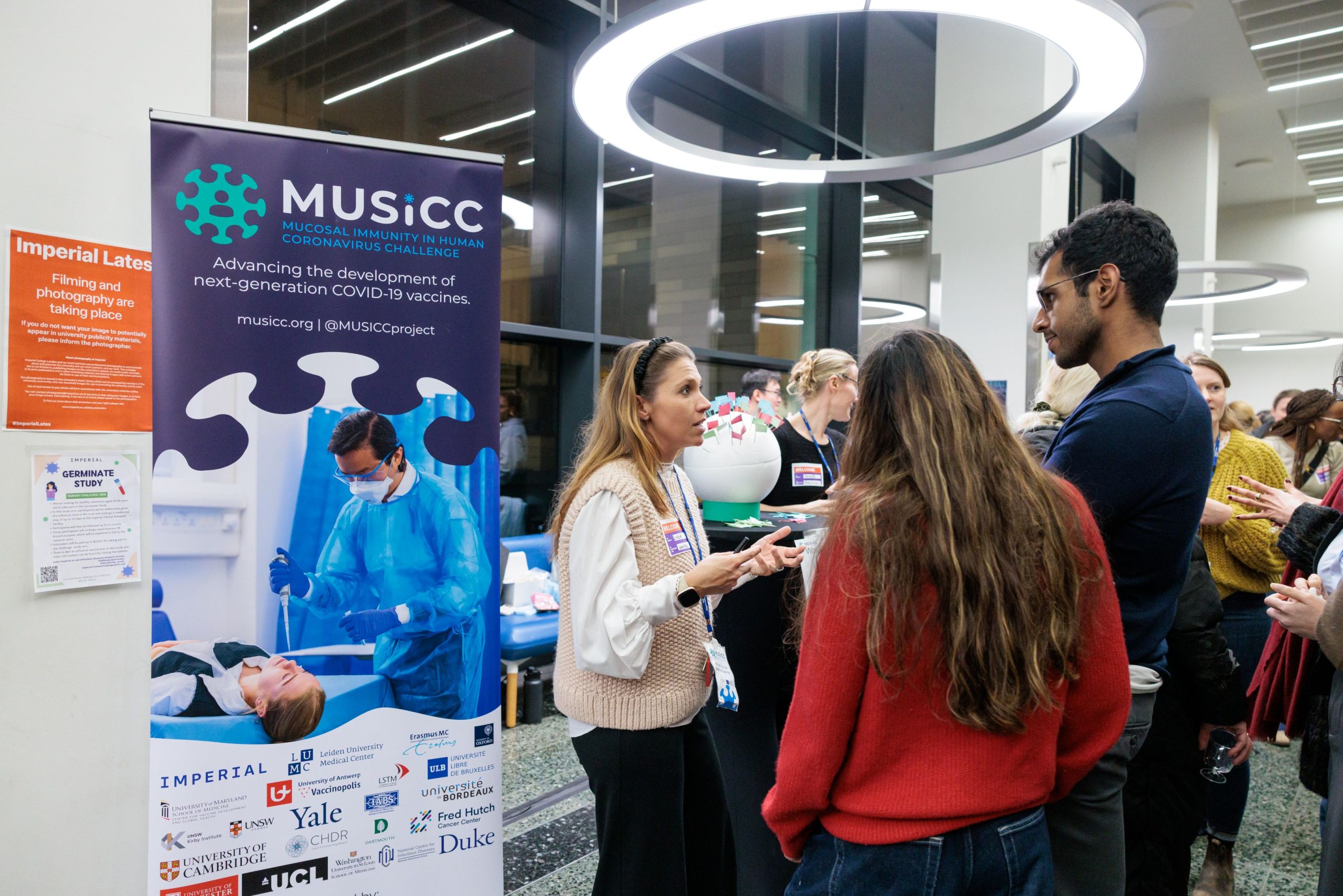
Visitors streamed to the stand throughout the night with plenty of questions. Credit: Brendan Foster / Imperial College London
The event attracted 800 attendees, 61% of whom had no prior connection to Imperial. Across the evening, the MUSICC team had interesting conversations with over 95 visitors, who had many questions to put forward!
The virus models once again showed an interesting pattern. Before speaking with the MUSICC team, most people said they wouldn’t take part in a human challenge study or felt unsure and needed more information. But after discussing the process with the team or taking part in an activity, the majority reported they would consider getting sick for science. This shift highlights just how valuable open, two-way conversations are when it comes to public engagement on complex research topics.
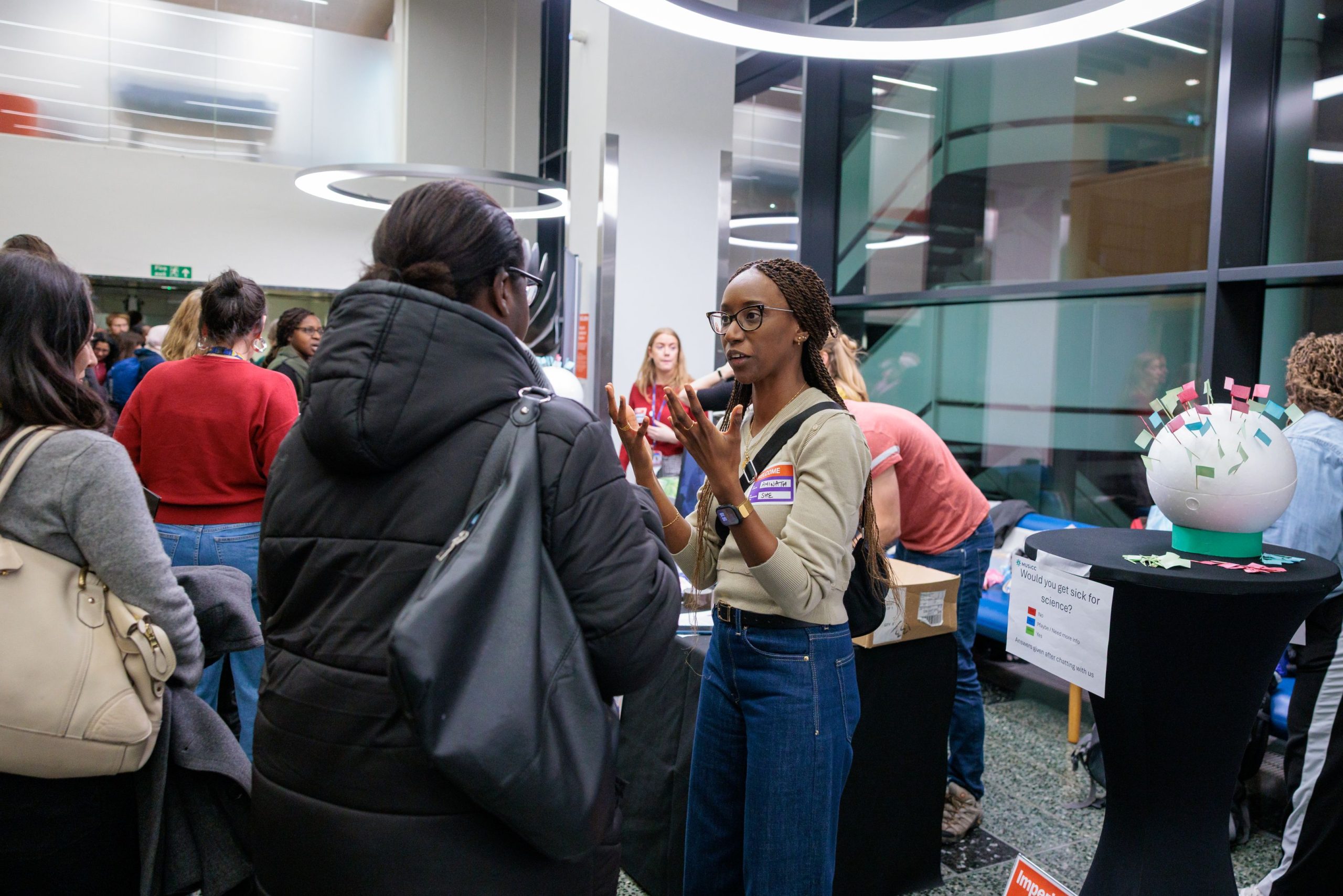
The virus models grew throughout the night as the processes of human challenge studies were discussed. Credit: Brendan Foster / Imperial College London
If you’d like to learn more about MUSICC’s human challenge studies and what taking part involves, visit the Get Involved page.
A huge thank you to everyone who helped run the stand, and to Imperial’s Centre for Societal Engagement for organising and hosting another fantastic Imperial Lates event!